
Fear: The Invisible Enemy Behind Every Limitation
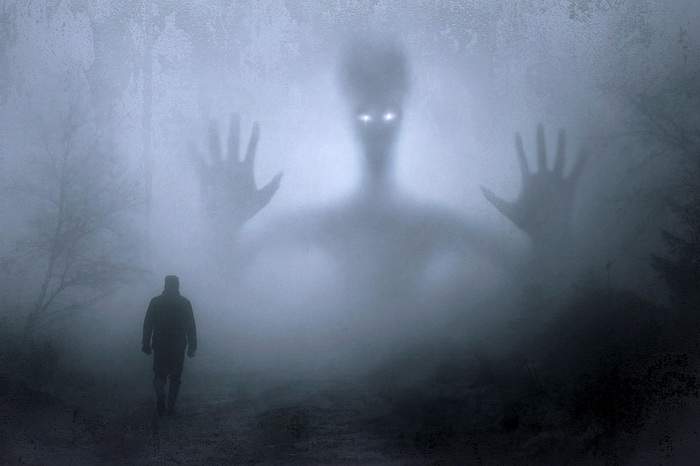
-Does the idea of flying scare you?
-Are you afraid of growing old?
-Or of poverty?
-Or of illness?
-Or of unemployment?
-Are you afraid to make decisions?
-To stand up for your rights?
-Do you have any other specific fears?
-Or do you have them all?
But what exactly is fear? Is it something we are forced to submit to? Is it something we must escape at all costs, or is it something we can use to our advantage?
What Is Fear, Really?
I wrote some time ago in the pages of this magazine that on the path to success we actually encounter only two real obstacles: fear and laziness. But since laziness is nothing more than the fear of getting to work, it becomes clear that fear, in all its forms, is the only true enemy of our dreams of success. I propose that we try to learn a little more about this enemy, to see if it might be possible to annihilate it.
Montesquieu said that the most obvious things are the hardest to define. In this case, everyone knows what fear is; we’ve all felt it, and yet it’s very hard for us to give a precise definition (in fact, this is an essential part of the problem: it’s hard to face something you don’t know precisely). Let’s do a little analysis to try to clarify our ideas.
The Three Levels of Fear
First of all, it is easy to see that there are at least three levels, three “levels” of fear.
At the first level, we encounter common fears related to a specific problem: the fear of public speaking, the fear of illness or accidents, the fear of being attacked, etc. Each of us has specific fears, which are usually linked to personal experience. If we analyze them patiently, however, we will find that despite their variety, these fears can be classified into a few major “categories.”
This brings us to second-level fears, which, moving beyond the specifics of certain situations, become linked to a particular state of mind. At this level “reside,” among others: the fear of rejection, failure, disapproval, loneliness, and so on.
Obviously, these second-level fears tend to have an integrative nature, encompassing various situations we encounter daily. Rejection, for example, is a fear independent of the form in which it manifests or is expressed, and confronting it can induce conditioning that will influence us for long periods of our lives.
The apex of the “pyramid” of fear, “Level III” fear, is, strange as it may seem, represented by a single anxiety: the fear that we will not succeed—the fear of failure, of not being able to cope.
Are you surprised? Reflect carefully, and you will discover that at the root of every fear lies the conviction that we will not be able to face what reality puts before us.
In other words, fear does not exist “in and of itself” but only in relation to a specific situation. Moreover, it does not relate to the present moment but only to the future (future in the sense of 10 minutes or 10 years—it doesn’t matter). When something we feared actually happens, we no longer struggle with fear but with the problem we must solve, which is something entirely different.
Fear and the Future
Fear is therefore a mental image we form of an event that may occur in the future, an image based on the idea that when that event happens, we won’t be able to cope.
Let’s go into a little more detail:
– the fear of unemployment is based on the mental image that if I were to lose my job, I wouldn’t be able to handle the situation;
– the fear of illness is based on the image that if I were sick, I wouldn’t know how to cope;
– the fear of loneliness is based on the image that if I were to be alone, I wouldn’t know what to do.
It is therefore worth asking ourselves: if we knew how to tackle these problems, why would we still be afraid? The answer is obvious: of nothing.
Therefore, fear is nothing more than our belief that we lack effective answers to a certain problem, a certain situation we have not yet faced. Let’s continue to explore other aspects of this truth.
Why Fear Never Truly Disappears
First of all, we must avoid falling into ambiguity: you have probably wondered if it wouldn’t be better to find a system through which we could get rid of fear once and for all.
Mistake: aside from the fact that fear is a natural and healthy feeling that compels us to pay attention to what we do and thereby allows us to protect ourselves, we must acknowledge a few principles:
As long as we are capable of growing, fear will always be present.
The only way to eliminate the feeling of fear is to limit ourselves to areas we already know, which is equivalent to condemning ourselves to intellectual and spiritual “death.” Regardless of the experience and skills we acquire, every time we want to tackle an area that is unknown to us, we will feel fear. Only when that area becomes part of our experience will that specific fear disappear.
This leads us to a second principle.
Action is an absolutely necessary condition for overcoming fear. This is the path through which we can ensure our personal development. Any person you admire for their courage could confirm that they faced fear but chose to confront it by taking action.
This brings us to the third principle.
Facing a situation we fear is far less terrifying than living with a hidden fear that can “undermine” our confidence in our own abilities. The more we limit our existence to “avoid fears,” the more our self-respect diminishes. This is the classic example of the ostrich burying its head in the sand.
The irony lies in the fact that by refusing to face a certain problem, we avoid exposing ourselves to stress and a much greater emotional toll than the concrete action itself would require…
A final thought
A few weeks ago, I came across a news story online that caught my attention: in a suburb of Los Angeles, there is a club for people with AIDS who, realizing they are effectively sentenced to death, have come to understand they have nothing left to lose and, as a result, are dedicating themselves to activities they would never have dared to undertake “before”: skydiving, mountain climbing, car racing, etc.
This led me to think that, ultimately, each of us (whether we like the idea or not) is “condemned to death.” I found it interesting and deeply moving that it is only when we become aware of the inevitability of death that we have the greatest chance of living a more intense and meaningful life, breaking down the barriers our fears have created for us.
An old samurai saying came to mind: “When you are in battle, remember that you will die anyway.”
The Hidden Cost of Safety
What did I actually mean to say in these lines? Fear is, to a certain extent, a healthy emotion that compels us to take the consequences of our actions seriously, but it can very easily turn into a trap that will limit our existence, preventing us from moving toward our goals and needlessly draining our energy in a “battle with phantoms.”
If we can accept the fact that the only thing over which we have no power is death, it will be much easier for us to understand that we are, in fact, capable of facing whatever may happen to us.
An old proverb says: “God, do not give the Romanian more than he can bear!” I believe these words can be interpreted in ways other than a fatalistic one.
What Do We Gain by Preserving Fear?
How about asking ourselves from time to time: what do I gain if, instead of facing it, I choose to “preserve” my fear?
You can find the answer by TAKING ACTION!


