
The Appeal of Destructiveness: Why Destroying is Easy
“Do you think you can crush a worm? There, you’ve done it… it wasn’t hard, was it? Now, bring the worm back to life!” – Lanza del Vasto
The Lanza del Vasto Encounter
Sometimes I can’t believe how many extraordinary people I’ve been lucky enough to meet. True masters—there’s no point in making a list. And, of course, Lanza del Vasto was one of them. I won’t go into detail about who he is: today, he’s almost unknown. But I advise you to do a little Google search.
I won’t even go into the series of coincidences that allowed a rebellious and cocky teenager—which is what I was back in 1976—to have the chance to spend a week with him when he came to Genoa, to show him around the city, to take care of his lodging and meals, and to accompany him to all his lectures.
And, of course, I won’t tell you about the effect he had on me. It was an encounter with a Master: for those who were lucky enough to experience it, no further explanation is needed; for the rest, a million words wouldn’t be enough.
No, I want to talk only about the quote above, which I found today, written in large letters, while leafing through my journals from my youth.
Obviously, it has many levels of interpretation: the first, of course, is that we live in a world where endless miracles happen—on their own: even if the entire scientific community were to focus its efforts, it would still be unable to produce a single worm. Yet the worm is there, to remind us of how little we can do, despite our arrogance and conceit.
The second, undoubtedly, is how easy it is to destroy something. And how hard—assuming it’s even possible—to build.
The Illusion of Power Through Destruction
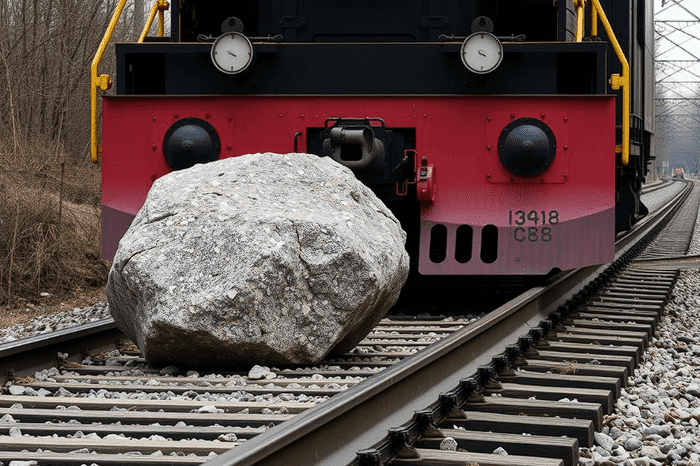
It takes thousands of people and immense resources to make a train run; but all it takes is a rock on the tracks, and the train stops.
It takes an immense amount of design and testing work to make a car run; but all it takes is a bit of sugar in the tank, and it stops.
You can store thousands of cubic meters of drinking water somewhere: all it takes is a bottle of mineral oil thrown into it, and it’s no longer of any use.
I think the allure of destruction comes from this false sense of power, that if we’re capable of destroying something, we’re stronger than the one who built it.
Why Critics Feel Stronger Than Creators
So, it’s very easy for us to destroy the work of others, their hopes, their dreams: a few words are enough, and the result is achieved. We criticize, we blame, we despise… How powerful we feel!
Some make a career out of this: think of those who are professional critics; or those who allow themselves to find faults in Leonardo, Einstein, Mozart…
Beyond Good and Evil: The Force of Creation
I, long ago, gave up on the notion of good and evil. I believe these are concepts that are, in fact, nothing more than strictly personal opinions. So, I no longer allow myself to say that one thing is good and another is bad.
But I know there is a force that moves toward creation, and another that moves toward destruction. And I can only be amazed that, while the work of destruction is so easy, creation still prevails.
Best regards
by Bruno


