
Coaching for High Performers: Why Results Matter More Than Labels
Anyone who has taken the time to read the latest articles on coaching has surely noticed the existence of different perspectives and opinions regarding the meaning of the term, the goals to be achieved, the methods to be used, and the working philosophy.
This is absolutely normal: if two lawyers or two architects rarely see eye to eye—even though they deal with a field that is seemingly more “rigid”—it’s no wonder that every coach—working with people—has a personal vision of what they do.
What coaching really means
However, I have to admit, though, that some ideas—which struck me as unusual, to say the least—piqued my curiosity and left me with a few questions, especially since I’ve never heard of them anywhere else.
As I’ve already written, in my view, “a coach is first and foremost a personal trainer who enables you to reach a level of performance that would be impossible to achieve on your own, and the focus on performance and concrete results are what define the work of a coach as I understand it.”
Thus, a coach who trains a soccer team or a young gymnast has some very clear characteristics: expertise in the field, authority over the person being coached, accountability for results, and the ability to guide and bring out the athletes’ potential through any available method.
Results before theories
I struggle to see how a coach leading a sales team or the CEO of a corporation could act differently—and achieve better results—by relying on incompetence, submission, irresponsibility, and silence.
Since I really enjoy learning new things, I hope to be in Romania for the coaching conference, to hear directly from professional coaches exactly how these “different” methods work, and to ask some questions to clarify things for myself.
For now, I’ll continue doing things my way, and instead of explaining what I do in theory, I’d rather tell you about a coaching session that I consider quite successful.
A Test on the Playing Field
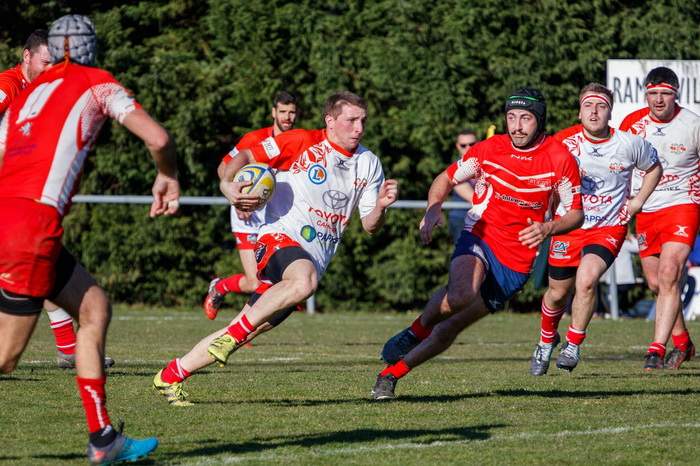
Last year, I had the opportunity to work for a day with Romania’s junior national rugby team.
This came about because, while talking with the president of the federation, I told him about firewalking and mental training methods, and he thought it would be a good idea to offer this opportunity to the national team as part of their preparation for the European Championship.
Of course, the event received quite a bit of media coverage, and a simple online search will reveal what the journalists had to say.
But I want to tell you how things look from the inside.
Preparing before coaching
First of all, I knew nothing about rugby. Even though the training had no direct connection to the game, it would have seemed completely ridiculous to me to coach a team without having any idea what they do or the challenges they face.
So, to gain at least a basic understanding, I read everything I could find, watched some videos of matches, and went to observe a few training sessions.
I talked as much as I could with the coach to identify the most important areas for development and any potential roadblocks that might hinder optimal performance, and I wanted to learn as much as possible about the team’s psychological “climate.”
Winning trust before changing minds
All this work was just to earn enough credibility and authority to be heard: what many trainers and coaches don’t understand is that performers of all kinds (athletes, salespeople, managers, singers…) are very open to anything that can improve their performance, but only when the suggestion comes from someone who demonstrates through actions that they know what they’re talking about and that—in a certain way—they’re “one of them.”
Sometimes all it takes is a simple slip-up with jargon, and suddenly you’re perceived as a clueless outsider from whom there’s nothing to learn, and whatever you propose afterward will be worthless.
In this specific case, knowing I’d have to face a a room full of tough young athletes, the first thing I wanted to avoid was that image—“here comes some professor from Italy to explain some fancy theories to us”; so I didn’t want to work at a hotel, but in their locker room; the guys were in their training gear and I was in a T-shirt, and the first thing we did was head out onto the field, where I practically demonstrated some elements of biomechanics and some techniques borrowed from martial arts regarding maintaining stability, unbalancing an opponent, increasing impact force, and so on.
After an hour of this kind of work, and after they had enthusiastically verified that what I’d suggested actually worked and could be useful to them, we went back indoors to continue with the rest of the session—but with a level of commitment and trust that I would never have achieved had I not proceeded that way.
The anatomy of a high-performance coaching session
We began the actual coaching process by first letting everyone analyze and evaluate their own identity, their role on the team, their personal motivations, their relationships with others on and off the field, and so on.
I think for many it was an important moment of self-discovery; meanwhile, I paid close attention to uncovering the “internal hierarchies”: who is the leader, who is the follower, where there might be sources of tension such as jealousy, rivalries, or misunderstandings…
The discussion about goals took place on several levels: obviously, the most urgent one was “to win the championship,” but I guided them, on the one hand, toward placing this goal within a broader context—whether in the strictly athletic sense or in the more general sense of life—with the aim of helping each person find “meaning” in what they do.
On the other hand, everyone had to identify what I call the “critical success factor”: every activity consists of many elements, but it usually has a few key points—or even just one—that determine success or failure, and this can be measured and improved.
(It’s unbelievable how much time people waste—and how inefficient they are—because they fail to identify this factor, sometimes even after years of work. And just as unbelievable is how trainers and coaches often fail to help those they train to clarify this point: in my opinion, a lack of clarity in this regard greatly reduces the chances of development and performance improvement.)
After each athlete identified this factor—and for many, it came as a surprise to discover what they were actually doing—I had each of them find their own way to improve it; of course, they set a series of personal and team goals, and then came the more “concrete” part regarding what needed to be done to achieve the desired results.
After that, we moved on to techniques for relaxation, concentration, visualization, mental training, tapping into resources, overcoming fears and limiting beliefs, and so on: the final firewalking segment is a “crescendo” that pushes people toward unexplored corners of their own minds, where they discover unsuspected resources and potential.
Firewalking as a performance anchor
Of course, the pretext is that “we have to walk through fire”: in reality, all my work is aimed at guiding people toward a state of “flow,” and anchoring that state in a way that the athlete can access it when needed—on the field or in everyday life.
(I don’t have space to talk about “flow” here. Maybe I’ll write an article about it next week.)
The firewalking went well; the excitement and adrenaline were at their peak, as usual, and after we returned, I took advantage of the questions and comments to summarize things and set some anchors that I thought might be helpful.
In conclusion, I don’t know exactly how to define my work that day: maybe it wasn’t coaching, but rather training, mentoring, counseling, team building, a ritual… I’ll leave the definition to the semantics enthusiasts.
Did it really work?
What I do know is that I wanted to achieve some results, and even in such a limited time, I think I succeeded.
The following month, when the team actually won the European championship, of course they didn’t win because they had spent one day with me, but because they’re extraordinarily talented and have worked and trained for years with dedication and passion.
However, when they found themselves in trouble and at a disadvantage in the final match and were in danger of losing the cup, the coach told me that all of a sudden they had a surge of pride that surprised even him, and within a few minutes they overcame the deficit and won the match.
I like to think that I, too, had a part—however small—in this outcome, and that some psychological anchors sprang into action at just the right moment…
And of course I felt responsible, and I wouldn’t have liked it at all if the team had lost.
Competence before certification
That’s what I consider coaching to be: competence, authority, responsibility, and guidance—and that’s what I’ve been doing for decades: whether it’s a sports team, a sales team, a singer, a manager, or even someone who wants to lose weight or find the courage to start a business, my approach is always the same: I educate myself on the subject if I’m not already familiar with it, I make sure I have enough credibility and authority to be heard, and—of course—I use every technique available so that whoever comes to me can find the answers and resources they need to achieve their desired result.
And when it comes to “responsibility,” I have a very simple stance: if someone who comes to me doesn’t achieve their goals, I simply give their money back (at least, that’s what I promise, since it hasn’t happened to me yet…), because that would mean I misjudged things from the very beginning regarding their capabilities: that’s why I’m quite careful when I make commitments of this kind. But, of course, this also means that the client authorizes me to do whatever it takes to push them toward results (fortunately, I’m not part of any association, so there’s no one to impose their “ethics” on me…).
The truth is that I have a fairly limited number of clients in this regard: in Monte Carlo, I’d rather focus on real estate than on training or coaching, and I’ve only accepted a few VIPs and celebrities who insisted—and whom I really couldn’t refuse… As a result, I hold my coaching sessions at the café across from the casino, or while jogging with the client along the seaside.
I come to Romania so rarely now that I wouldn’t have time to take on anything like that: maybe in the future—we’ll see.
Speaking of Romania and coaching, I think it will take a little time for things to become clearer: aside from the doubts I mentioned at the beginning, I also doubt that the thousands of coaches who suddenly appeared on the market have the necessary training for this, and I’m actually curious to see how they operate in practice.
I understand that anyone who’s heard how much a coach can charge might have thought about entering the market without worrying too much about their training, but by acting this way—when, inevitably, results don’t materialize—clients will be disappointed, and the entire profession will be discredited.
On the other hand, anyone who truly wants serious training is faced with such a vast and confusing array of options that it’s hard to make a safe choice.
Fortunately, things are moving fairly quickly now, so natural selection will weed out the unqualified in a relatively short time.
For now, I advise those who want to turn to a coach or a coaching school—whether local or foreign—to follow Jesus’ advice in Matthew 7:16: “You will know them by their fruits. Do people pick grapes from thorns, or figs from thistles?”
I know I’ve already expressed this concept many times, but I’d better emphasize it once more.
Results are the only real test
In any case: maybe I’m a bit obsessed with “results, results, results”; but I think that, whether it’s a regular client, a corporation, or a sports team, if someone is paying a coach good money, that’s what they want in return: a career advancement, an increase in sales, an improvement in performance—in short, something concrete that can prove to them it was worth it.
If, instead of concrete results, what we offer clients is empty talk and psychobabble, I seriously doubt that the coaching profession will have any growth or future.
by BrunoAbout
Published on Business Edu Magazine, June 1, 2007


