
The Art of Becoming… Likeable
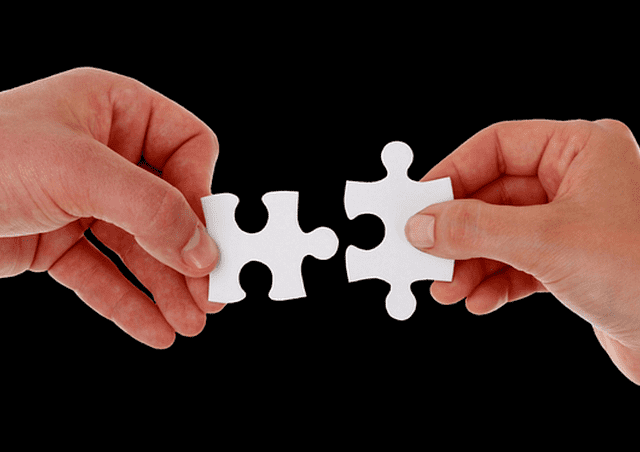
If I told you that in this article I’d like to explain the technique of composing a symphony, you’d think I’d suddenly gone mad, or that I’m trying to make fun of you: assuming that a complex artistic creation—such as a symphony—can be reduced to a set of fixed rules (which, in any case, isn’t true…), anyone knows that learning them requires years of study at a conservatory, guidance from a specialist, hard work, and, above all, personal experience gained mainly through trial and error.
I say this because the claim to explain the technique (or, rather, techniques) of “rapport” in a few-page article is not only absurd but, since we are dealing with personal rapport, it also becomes dangerous (the more advanced techniques derive directly from those used in therapeutic hypnosis and are aimed at influencing the unconscious part of the interlocutor, involving all means of communication, both verbal and nonverbal; their incorrect application would lead to catastrophic results).
The Symphony of Human Connection
Let’s not forget: communication—especially paraverbal and nonverbal communication (which, let’s remember, together account for 93% of the perceived message)—is a skill whose mastery requires direct verification of how what has been learned in theory is applied in practice. It’s the same as if you were to take the controls of an airplane after reading a book titled “How to Become a Pilot in 24 Hours.”
Therefore, I will limit myself to presenting the basic concepts, without delving into the details of techniques that could easily be misunderstood, and I will propose a simple exercise that you can use to create your own experience.
One more thing! To avoid unnecessary repetition, I’m counting on the fact that you’ve read the previous articles, which I’ll often need to refer to.
What is Rapport? An Exercise in Flexibility
Here’s an exercise for you. Think back to the last time you met with a friend. Now try to recall your body posture, the gestures you made, the tone of your voice and the words you used, as well as the feelings you experienced. Recall the situation for a few minutes with as much detail as possible.
Good. Now do the same thing, but imagine you’re talking to a priest, then an army officer, then a five-year-old child, and—why not—a beautiful girl (you can keep going as long as you like, imagining other situations: meeting the President of the United States, a rock star, an alien…).
With just a little attention, you have surely noticed your ability to adjust not only your language but also your tone, your gaze, and your body posture in relation to the person you are with. You have also realized that these changes are not due to hypocrisy or insincerity, but to the need to establish a dialogue with the other person, seeking common ground where such a dialogue is possible (for example, I hope it wouldn’t occur to anyone to talk to a child as if they were speaking to Bill Clinton, or vice versa…).
Taking this line of reasoning further, we conclude that in these cases our task is relatively straightforward, insofar as the public role a person plays provides us with sufficient insight into their belief system, their values, and the way they are likely to react to our behavior.
A first definition of “rapport” would therefore be: the ability to attune to the other person, so that we respect their belief system and values and use verbal and nonverbal communication that allows us to be understood.
What is important to understand now is that we already possess, instinctively, the ability to establish “rapport” and to modify our behavior for this purpose, without, however, feeling hypocritical or deprived of our individuality.
Without “rapport,” there is no effective communication
Let’s move on. No doubt you’ve realized that in some situations it’s easier than in others, based on your own experiences: perhaps you feel at ease with a priest but not with a child; perhaps you know how to address a general but feel awkward when dealing with a young woman. The consequence of what I’ve said—which may be obvious, but which, unfortunately, is the reason most sales and communication tests fail—is that there is no single right way or perfect technique for talking to someone, but there is a more effective way than others to talk to that particular person.
The implication of the definition of “rapport” is, therefore, the ability to choose, from the range of behaviors at our disposal, the one that allows us to find common ground most quickly. The consequence is this: the greater our flexibility (the ability to adapt our behavior), the greater our ability to establish “rapport” with the other person.
And so, before examining various techniques, allow me to make an observation: whatever we plan to do, whatever goal we decide to pursue, there is someone capable of helping us achieve it faster and better (remember? Belief No. 6: People are our greatest resource).
Why Rapport is Essential for Effective Communication
In addition, rapport is considered essential for the ability to motivate others. Once a common ground of understanding has been established, it will be infinitely easier for me to guide the other person in the direction I want.
The ability to establish productive rapport with others is the foundation of everything and every achievement, and it helps me immediately understand whether a person will succeed or fail in what they do. For the figure of the lone wolf is a fascinating literary invention, but it has no counterpart in reality (and, even if we assume success, with whom will they share that success?).
How to Establish Rapport: The “Mirror and Lead” Method
Having noted its importance, let’s see how it is possible to establish rapport with the other person.
The first step is to identify what you have in common or to create a sense of connection so that the other person feels a certain affinity with you. Think back to a casual encounter, and you’ll realize that the first steps had some common ground: a shared interest, a mutual acquaintance, or even just the fact that you shared the same zodiac sign.
Think about the “rapport” that forms immediately when two soccer fans wearing the colors of the same team meet: two complete strangers who, after a few minutes, are chatting like old friends!
So, if we want to establish a dialogue with someone, it is essential to focus on our common ground, setting aside our differences for the moment. But this is obvious, and we are interested in something much more subtle and effective. The process of perceiving common ground with another person operates primarily at the subconscious level and is determined by a whole series of micro-behaviors (let us remember that every behavior is a form of communication) which, although perceived just below the threshold of consciousness, determine the final outcome.
In this case, the mechanism consists of decoding the elements that characterize our interlocutor, using them to establish contact, and subsequently guiding them where we deem appropriate. (The “reflect and guide” method).
Key Levels of Interhuman Tuning
In all sales training courses, we’re told to put ourselves in the customer’s shoes or see things from their perspective, but we’re never told… how. Let’s look at the “key” points we need to focus on to achieve the desired result. Each of these points has a specific “reflection and guidance” mechanism, which we now have a general idea of, but which we will analyze in one of our future articles.
Physical
– Respecting personal space. In a private conversation, each person has their own zone of optimal distance, which must be identified and respected. This zone is easy to identify because, when it is violated, the person leans back slightly or takes a (small) step back.
– Body posture and gestures. Mimicking (or rather, mirroring) the other person’s body posture, when done correctly, immediately creates a sense of rapport that the person perceives but cannot quite explain.
– Breathing rhythm. Synchronizing with the other person’s breathing rhythm, even if it seems strange and unnatural, is one of the most powerful tools we have at our disposal for establishing rapport.
Verbal and paraverbal
– Mirroring the other person’s dominant sensory channel. We discussed this in the August issue. Each person has a preferred sensory channel (visual, auditory, kinesthetic) and expresses this by favoring certain “key” words. In the same way, they will attach special meaning to certain words, and it is up to us to discover and use them. As for what I said in the October issue about the questions to ask, these will be of real use to us.
– Tone of voice and speed. Here, as with gestures, imitation must be done with extreme care to avoid crossing the boundary of the conscious; their importance is, in any case, fundamental.
Mental
In this case, a book is needed (which, in fact, I am currently working on!), as the limited scope of a single article—or even several articles—is simply insufficient. Let me, however, provide a brief overview.
Metaprograms are general-purpose structures, independent of content, that determine how we approach experience.
The main metaprograms are:
– Toward/Away: a person may be motivated to obtain something pleasant or to avoid something unpleasant.
– Internal Reference/External Reference: a person makes decisions based on their own feelings or on what others say.
– Appropriate/Inappropriate: a person may focus heavily on similarities or differences.
– Possibilities/Needs/Motives: this depends on the justification a person finds for their own actions.
Metaprograms must be identified using appropriate techniques and then replicated and applied during the conversation.
Values
They are true evaluation filters. They concern the way we decide what is good or bad, right or wrong.
To identify them, I must answer the question “What is important to me?”
Values are arranged hierarchically, from most important to least important, and can be easily identified with a few key questions.
Equivalent criteria
These represent how values are understood in practice. Because the same value (freedom, for example) is understood in very different ways.
Beliefs
Beliefs refer to the conviction that certain things are true and others are not (see the November article) and to cause-and-effect sequences (if…, then…).
They are formed throughout our entire existence based on:
– the social environment
– events
– knowledge
– previous results
No one can normally react outside of their own beliefs, so these must also be carefully identified and taken into account.
Failing to take another person’s beliefs and values into account is the main cause of misunderstandings.
Attachments
They accompany values and beliefs and pertain to a specific element (they are fundamental during a sales meeting).
Memories
Memories profoundly influence people’s perceptions and behavioral responses.
Obviously, you can’t know everything someone remembers, but the information a person retains from certain experiences can also be useful in guiding a conversation—if… we’re aware of it.
Decisions
Decisions concern us and our environment and are made unconsciously in the early years of life and predominantly consciously thereafter (rationally or emotionally). They express beliefs, values, and attachments.
Perhaps some of you are wondering right now whether it’s really worth knowing all this about a person, while others are amazed at just how much there is to discover. What I can say, based on my experience, is that after a little practice, identifying these “key points” becomes second nature. Overcoming resistance at these “key points”—especially in business negotiations—means using them to steer the conversation to your advantage without the other person realizing it. At this point, the other person will perceive you as a particularly likable person to whom, for some reason, they are inclined to do certain favors they wouldn’t do for anyone else.
A little homework
In any case, since I believe that personal results are what ultimately matter, I propose a preliminary experiment while we await the major results.
During your next meeting with someone, try to mirror their body posture and movements (discreetly, of course, and not in a vulgar way) and see what happens. Also try to mirror your conversation partner’s predominant sensory channel, as we discussed in the August issue; then break eye contact. Once again, your personal observations will be the best learning experience for you. As a flexibility exercise, have fun mimicking certain specific beliefs of someone you know and try to imagine how your own behavior might change if you briefly adopted those beliefs. It’s a tiring exercise but an extremely instructive one.
One last thing: when you adopt someone’s mannerisms, values, and beliefs, you truly begin to see things from their perspective and become much more understanding and empathetic. Does that seem like a result worth dismissing?


