
“The Art of War” in the Business World
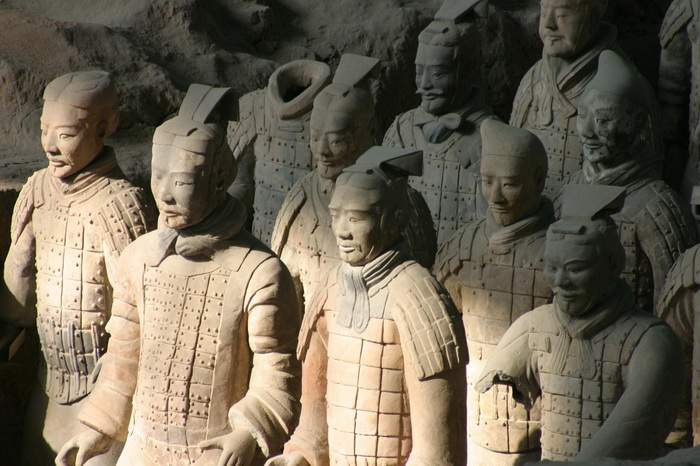
Anyone who has ever skimmed through a marketing test has likely been surprised by the number of military terms and metaphors used: objectives, strategies, positioning, market niches, frontal assault, guerrilla tactics…
This shouldn’t surprise us too much: in a market economy, there is competition, and competition means rivalry.
While in war the goal is to conquer territory, in business the goal is to gain market share; weapons are not used, but rather salespeople and advertising.
However, the basic strategic principles remain the same, and good preparation in this regard will prove invaluable.
On the other hand, I mentioned in passing in the last issue that the works of the Latin classics explain in great detail—more effectively and concisely than modern treatises—what we need to know to succeed in the business world.
This, too, should come as no surprise:
even if the environment and technological resources change, the principles of behavior remain the same.
Moreover, in antiquity, unable to rely on the means available to us today, the success of any endeavor was determined, for the most part, by the ability to make the most of the human resources at hand.
And, given the difficulty of preserving and reproducing written material, people tried to condense the maximum amount of information into the fewest possible words (unlike what happens today, when a book is filled with just two or three extremely banal concepts…).
These two premises, stated above and seemingly unrelated, allow me to discuss the most spectacular manual on business success ever written:
it is not Latin, but Chinese, and dates back to 400 B.C. It is General Sun Tzu’s “The Art of War” and contains a collection of all the advice to follow in the world of war (and business, we might add). Let’s not forget, China is the birthplace of martial arts.
The work has also been published in Romanian, but I haven’t been able to find it.
In any case, I’m convinced that few of those who bought it thought to use it as a business guide.
Since I feel obliged to justify the above statement, I would like to use the space available to me to present a series of quotes for you to reflect on, without following any particular logic in their arrangement.
I do not, however, wish to overwhelm you with historical information, which you could find in any good encyclopedia.
Choosing the quotes was particularly difficult, since every verse in each of the 13 chapters contains something important; needless to say, instead of “army,” “soldiers,” and “general,” we should use business terms in our dealings.
Furthermore, some truths may seem obvious, but if we observe practice, we will discover that this is not the case at all.
That being said, let us give the floor to the Master.
– Five things are essential for victory:
– he who knows when to fight and when not to fight will win;
– He who knows how to use his superior and inferior forces will win;
– He who has an army animated by the same spirit at all levels will win;
– He who, having prepared himself, knows how to wait for the moment when the enemy is unprepared will win;
– He who, having military training, will not tolerate the interference of rulers will prevail.
– Military operations require the following stratagem: if you are skilled, appear unskilled; if you are capable, appear incapable. If you intend to attack nearby, prepare as for a long march. If you intend to attack from a distance, pretend you have already reached the halfway point.
– Lure your enemy with the prospect of a gain; take advantage of the confusion and defeat him.
– Provoke irritation to create disorder.
– To kill the enemy, men must be motivated by zeal; to see the advantage of victory, they must receive the proper reward.
– In a chariot battle, reward the first to capture 10 (chariots).
– The objective of war is victory, not the glory of the victor.
– A commander unable to control his anger will send his men into an assault like a swarm of ants, with the result that one in three will be killed and the objective will not be conquered.
– Trying to lead an army in the same way a kingdom is governed, ignoring the conditions under which it operates, will lead to ruin.
– That is why it is said:
If you know your enemy and know yourself, you will win 100 battles.
If you know yourself but do not know your enemy, for every victory you will suffer a defeat.
If you do not know yourself and do not know your enemy, you will be defeated in every battle.
– The great warriors of antiquity would first place themselves in an unbeatable position and then wait for an opportunity to defeat their enemy.
That is why it is said that the skilled strategist fights after he has won, while the one destined for defeat begins to fight and only then tries to win. (Please reflect on this seemingly paradoxical statement, for it holds the key to success in any action you wish to undertake.)
– Controlling a large force is like controlling a smaller one: it is simply a matter of dividing their numbers. The skilled commander seeks the result of the combined action of the groups and does not demand too much from individuals.
– The one who arrives first at the battlefield and waits for the enemy’s arrival will be fresh and ready for battle, while the one who arrives second will be exhausted even before the battle begins.
– You can be sure of success only when you attack positions that are unguarded; you can be sure of defense only when you hold positions that cannot be attacked.
That is why the general whose enemy does not know what to defend is skilled in attack, and the general whose enemy does not know what to attack is skilled in defense. (I believe these two precepts represent the perfect synthesis of the entire art of war—or marketing, if you prefer…)
– The point where we intend to attack must not be revealed; thus, the enemy will have to prepare against an attack from various points, and, with their forces spread across multiple points, the number we face at each point will be proportionally smaller.
– Do not repeat the tactics that led you to victory, but let your methods be guided by the infinite variety of situations.
– When encircling an army, leave them a way out; do not drive the enemy to desperation.
– If a general shows confidence in his men but always insists that his orders be carried out, the reward will be mutual.
– Speed is the essence of war.
– The principle by which an army is led is the setting of a standard for results that must be achieved.
– Do not move unless you have a specific gain in mind; do not use your troops until an advantage arises; do not fight unless it is absolutely necessary.
– A military leader must not lead his troops into battle merely to satisfy his pride.
I would have liked to add a personal comment to these precepts, but that would have been an excess of conceit.
Read them and adopt them; you will discover that they contain much more than meets the eye at first glance.
I conclude with a precept that strikes me as the best wish one can offer to those who struggle in the difficult world of business.
May you be swift as the wind and dense as the forest. In attack and in pursuit, be like fire; in ambush, be immovable as mountains.
May your plans be dark and impenetrable as the night, and your strike powerful and swift as lightning.
Good luck in business!


