
Casanova’s Secret
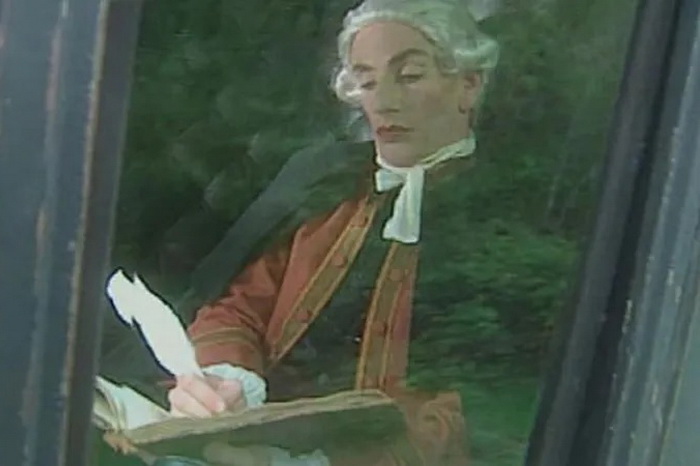
“Deceiving a fool is a mark of distinction and a duty for every intelligent man”
“The reader who loves to think will see in these memoirs that I have never had a specific purpose in my life and that, therefore, the only criterion I have adhered to—if one can speak of a criterion—has been to let myself be carried wherever the wind blew me.”
“Man is free only if he believes himself to be so.”
“My mistakes will show those who love to think the art of walking on the edge of a precipice without falling into it: all that is needed is courage, for strength, without self-confidence, is useless.”
“Those who do not love life do not deserve it.”
“Never give a woman time to think it over.”
(from “Histoire de ma vie,” by Giacomo Casanova)
Beyond the Bedroom: The Real Giacomo Casanova
Who doesn’t know Giacomo Casanova? Beyond the films, books, articles, and studies dedicated to his amorous adventures, even in everyday language the word “Casanova” is used to describe a seducer obsessed with conquests, an immoral libertine whose main occupation is to move from one bed to another.
And it seems that the films and books dedicated to him go out of their way to highlight this aspect as much as possible.
But this is a mistake, and an extremely gross one at that: Casanova is much more than that, and anyone who has studied his life and the works he left behind—let us not forget that he is undoubtedly one of the greatest writers of his century—cannot help but be dismayed that such a complex and extraordinary figure is remembered only as a vulgar womanizer.
His autobiography, far from being a pornographic novel, is a densely woven and gripping narrative of fascinating adventures, constant travels, encounters with the most diverse array of people, and dialogues with extraordinary characters; a highly successful blend of magic, business, espionage, history, philosophy, and, of course, romantic conquests; yet this all unfolds within a context where everything he does is not merely the pursuit of pleasure, but the desire to seize the present moment with the curiosity to discover all it has to offer—and this beyond hypocrisy, inhibitions, and fear.
Casanova has been called a philosopher in action, and no one better than he was able to interpret Horace’s maxim, the “carpe diem” that everyone quotes, or that “sequere deum,” “follow the god,” which in his case has no particular religious significance, but expresses the belief that each of us has a “divinity” within us that—if heeded—will always guide us in the best direction.
Many wonder what the secret was behind Casanova’s success with women, a success that made him more famous than his other achievements. I certainly cannot summarize here the thousands of pages of his autobiography, but certain aspects of his life can offer us valuable clues.
A Life of Extremes: From Priest to Spy to Inventor of the Lottery
Casanova was born in Venice in 1725, the son of two actors (though it was rumored that his real father was a high-ranking nobleman, of whom his mother was the mistress); he was raised by his grandmother, who did her best to replace his parents: his father, who died prematurely, and his mother, who was constantly on the road performing across Europe.
Due to his poor health and the difficulties he showed in speaking and reading, he was considered little more than mentally disabled until the age of 8, when—during a crisis more violent than the others, in which he found himself on the brink of death—his grandmother took him to a sort of witch doctor, who healed him completely and “unlocked” his mind. In an incredibly short time, young Giacomo caught up, demonstrating a fantastic memory and intelligence.
He studied Latin, Greek, classical literature, theology, philosophy, mathematics, and music, and was sent to study in Padua, where he graduated from law school at age 16. In the meantime, he began—with little success, evidently—a career in the church.
He began traveling far and wide, displaying a growing curiosity about everything, an innate talent for drawing attention to himself, for charming anyone he met, and—with a tendency to act on the impulse of the moment without much thought—for getting himself into all sorts of trouble, from which he often managed to extricate himself only through strokes of luck that bordered on the incredible. He went to Constantinople, Corfu, Rome, and Naples, then returned to Venice, where for a time fortune turned its back on him and he managed to support himself only by playing the violin in the theater orchestra.
One evening, on his way back from rehearsals, he saved a nobleman who had fallen into a canal from certain death.
It was the stroke of luck he had been waiting for: he convinced the nobleman that he was an occultist skilled in numerology and able to consult astral entities at will to seek oracles, and thus began another activity that would be a constant throughout his life: taking advantage of the rich and powerful by exploiting their gullibility and superstitions.
There is not enough space here to go into detail; in any case, during this period Casanova spent his time traveling, racking up romantic conquests, and gambling.
The Master of Self-Reinvention
He moved to Paris, where he learned French and mingled with the local nobility; in the meantime, he became a Freemason. He set out on the road again, and after traveling the length and breadth of Europe, he returned to Venice, where he was arrested and imprisoned in the famous Prison of the Piombi.
It is not known what he was accused of, but the Inquisition Tribunal described him as “a libertine, occultist, swindler, cheat, and Freemason.” He had certainly stepped on someone’s toes in high places…
After more than a year—the first and only time in the prison’s history—he managed to escape and flee Venice. The book in which he described his escape in detail became known throughout Europe, opening doors for him to the highest echelons of society, all the way up to nobles and kings.
After another series of travels, he returned to Paris, where he convinced a very wealthy noblewoman that he was capable of performing a ritual in which she would be reborn in a male body, and this “disciple” became his main source of income for quite some time.
Meanwhile, he declared himself an expert in public finance and explained to the French minister—who, like all finance ministers in every country, was seeking new revenue for the state coffers—the best way to fix public finances: a state-run gambling game. After presenting pages of calculations to a skeptical committee, the system was accepted: its rules have remained unchanged to this day, and the game is called “Lotto” (yes, for those who didn’t know, the modern-day Lotto was invented by Casanova…)
In the following years, he meets, among others, Voltaire, Prevost, Saint Germain, Rousseau, Cagliostro, Pope Clement XIII… his travels seem endless, as does the string of famous figures he encounters.
He returned once more to Paris, but this time he was accused of occult practices and forced to leave; he arrived in England, where for the first time he lost his head over a young girl (the famous Charpillon), who publicly ridiculed him in every possible way and drove him to the brink of suicide.
He sets out traveling again, heading to Berlin where he meets Frederick the Great and—posing as a hydraulic engineer—proposes new methods for water canalization. From there he heads to Russia, where he is received in audience by Catherine II and—needless to say—presents himself as an expert in state organization and proposes a series of reforms.
In Poland, he nearly gets killed in a duel; he flees to Spain to avoid arrest, but even there he ends up in jail over money troubles. He manages to get out only thanks to the intervention of his current lover.
He continues traveling across the peninsula until—in 1774—he is pardoned and can return to his native Venice, where he works as a spy in the very service of those who had condemned him.
In this new profession, he began traveling again, but it was a short-lived job.
Left completely penniless, he took up writing, without much success. Among other things, he translated the Iliad from Greek into Venetian.
Aged and penniless, he took a position in Vienna as a nobleman’s secretary, and later as a librarian at Dux Castle in Bohemia, but he did not give up his social life: he was present on the evening of the premiere of Don Giovanni in Prague (1787), and since he was a friend of both Mozart and Da Ponte (the opera’s librettist), there is a good chance he made a significant contribution to the ideas and text of the masterpiece.
He spent the last years of his life in Bohemia writing, devoting himself above all to his autobiography and thus reliving in his memories an extraordinary and inimitable existence.
Even from these few notes alone, we can get a sense of the kind of man we’re dealing with: today, people speak of Casanova with admiration, citing the number of women he seduced, without considering that what makes them extraordinary is the social standing of his lovers.
In a society like that of the 18th century, rigidly divided into castes, it was absolutely unthinkable that the son of two actors could even address a nobleman directly, yet Casanova was welcomed everywhere as a star: partly because he was a fantastic conversationalist with immense culture, partly because he had traveled extensively at a time when this was an exception, but above all because he had the talent, the courage, and the audacity to engage people on their own terms, discussing philosophy with Voltaire as an equal, theology with the Pope, politics with ministers and kings, music with Mozart, and magic with Cagliostro, always leaving his interlocutors fascinated and impressed.
If there is a secret to Casanova’s success, it can only be that of pursuing a goal by using every means at his disposal, without the slightest inhibition and with an extraordinary talent for knowing which buttons to push.
The variety of methods he employed for his romantic conquests is as vast as the number of women he seduced, but in every situation, his primary goal was to make the woman the object of his attention feel like the most charming, seductive, attractive, and important being in the universe; and then, undoubtedly, his ability to highlight her talents in some way; so, he discusses philosophy with the intellectual, buys a cello for the musically talented one, offers career advice to the one seeking work, and teaches exotic recipes to the homemaker.
In this way, every woman felt that in his presence she was offering the best part of herself, and this leads to another characteristic of Casanova that makes him unique: that all his former lovers, even those of a single night, retain a pleasant memory of him, and those who meet him again later do not hesitate to help him and get him out of trouble.
But be careful, I don’t want to give the impression of a perfect gentleman: when he can’t succeed by fair means, Casanova uses any means necessary, trampling without hesitation on any moral norm or simple common sense: he has no qualms about offering money (once offering money to a mother to sleep with her virgin daughter…), using threats, blackmail, violence, and in some cases resorting to outright rape.
He demonstrates the same lack of restraint when he needs money or to gain an advantage: thus—and here his talent as an actor is revealed—in times of need he proclaims himself a colonel, a doctor, a nobleman (he appoints himself Knight of Seingalt), a magician, an alchemist, an engineer, an economist…
He runs the gambling table, cheats, and when he’s the house, he steals.
At the same time, his outbursts of generosity, on every level, are countless.
Casanova vs. Don Giovanni: The Collector vs. The Lover of Life
Returning to seduction, we mentioned Don Giovanni earlier, and the comparison between these two seducers is practically inevitable; often—in common parlance—there seems to be no difference between saying “he’s a Don Giovanni” or “he’s a Casanova.” But there is a difference, and it is enormous: while Casanova truly loved the women he conquered and tried in every way to make them happy and value them, Don Giovanni represents the pure collector, who—unlike Casanova—has no other purpose than to add another conquest to his catalog, with the most total indifference to the consequences of his actions. And then, let’s not forget a fundamental fact: Don Giovanni is a literary character, Casanova a man of flesh and blood.
The Real Secret: Giving Yourself Entirely to the Present Moment
Finally, I am aware that it is impossible to do justice in a few lines to a figure of such stature; however, I hope at least to have succeeded in freeing Casanova a little from the cliché of the pleasure-seeking libertine obsessed with sex, with no other activity than chasing after women. Casanova does not chase after women; Casanova chases after life, and for him, women are merely one aspect of life that must be explored and appreciated in all its facets; he lives every moment with the utmost intensity, engages with his whole being in every experience, and uses it as a source of pleasure and learning, regardless of whether it is positive or negative.
If we have anything to learn from him, it is this extraordinary ability to give himself entirely to whatever life is offering him at that moment, without distinguishing between a business negotiation, a book, a work of art, a theatrical performance, or a woman.
And, perhaps, we will discover that giving oneself entirely to the present moment is not Casanova’s secret but the secret of existence.
by Bruno


