
The Sales Jungle: Why Humans Still Buy Like Cavemen
Why Advertising Presses Emotional Buttons
Have you noticed how much advertising uses sex in all its forms to sell us something, even if the product itself has absolutely nothing to do with it?
Have you noticed how quickly rumors about bird flu spread—and how fast people rush out to buy medicine?
Have you noticed that the news only talks about accidents, violence, theft, corruption, and so on?
Have you noticed how huge the “dating” industry is in all its forms? (fashion, clothing, makeup, hairstyling, weight loss, and so on?)
Have you noticed how quickly essential items like sugar, oil, and tobacco (!) disappear from the shelves if there’s even a hint of a shortage? (And of course, THAT is what causes the shortage…)
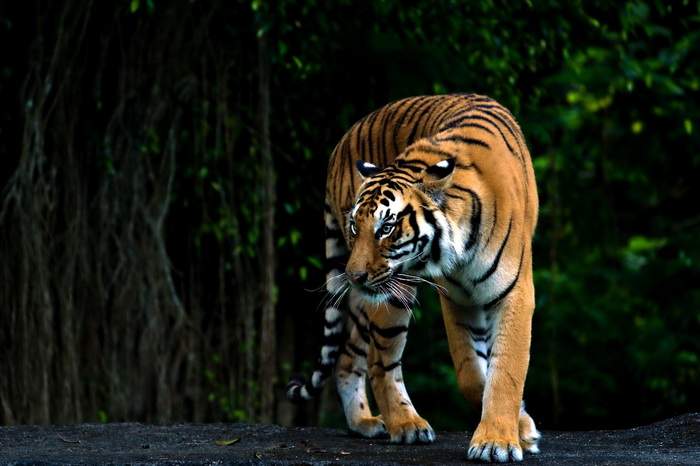
If you’ve noticed all this and wondered why humans are so irrational, or why advertising creatives keep pushing certain buttons, the answer is very simple: the human brain evolved in the savanna and the jungle, and today’s human is still a creature of the savanna and the jungle.
Why Humans Are Not Fully Rational
Even though we’d like to believe we’re an exception, and privileged beings of creation, the only thing that sets us apart from animals is the cortex or neoencephalon—that is, the outermost layer covering the brain.
But underneath, the entire animal part has remained untouched and continues to shape our behavior.
And take note: it is the cortex that makes us human—but humans of the jungle.
In fact, our behavior as “civilized” humans is only a few thousand years old and is really nothing more than a “coat of paint” over the brain.
And it’s immediately apparent how this supposed education and civilization vanishes the moment our survival is at stake or our animal side is somehow triggered by something.
Survival and Reproduction
So, if we are jungle people, it means our primary desires are only two: to survive and to reproduce.
To survive means to find food and defend ourselves against beasts and enemies, and if we encounter them, we must decide whether to fight or flee. To reproduce means finding a partner, having children, and caring for them.
The Four Primitive Impulses
Thus, we arrive at the four basic activities of a jungle dweller: to eat, to fight, to flee, to reproduce—for which nature has equipped us with four basic impulses to address these needs: hunger, anger, fear, and libido.
Now it may become clearer how all our desires to buy a product fit into our need to survive and reproduce, and consequently, anything that knows how to press our ancestral buttons manages to control our behavior.
Fear, Status and Attraction
So our desire for a beautiful home satisfies our need for safety, for protection for our family and children, and for status and our position in the community.
A high position in the community represents power, and power means nothing other than who has priority access to food and reproduction.
Improving our physical appearance guarantees us a better chance of finding a partner, and this may help us in the race for a higher position… Ultimately, everything we desire serves, in one way or another, to satisfy those two basic needs.
It is indeed impossible to go into detail and fully grasp how these premises can take us far: this is the domain of a new branch of psychology, namely evolutionary psychology, and of memetics, the science that studies how ideas spread from person to person, and which states that an idea spreads faster the more it taps into those four basic emotions.
What Does Your Product Really Sell?
However, if we want to return to sales, we could take a moment to analyze our product and ask ourselves: which deep part of our brain does it appeal to? What emotions can it trigger? And what would happen in its absence?
The examples are countless, and it’s wonderful in seminars to spark these discussions and see salespeople realize for the first time—perhaps after years…—what their product is truly for.
And this usually leads—of course—to a spectacular increase in sales.
So, even if I can’t help you directly, take a fresh look at your product: maybe you’ll find the key to becoming true “jungle salespeople”!
Good luck with your work
by Bruno


